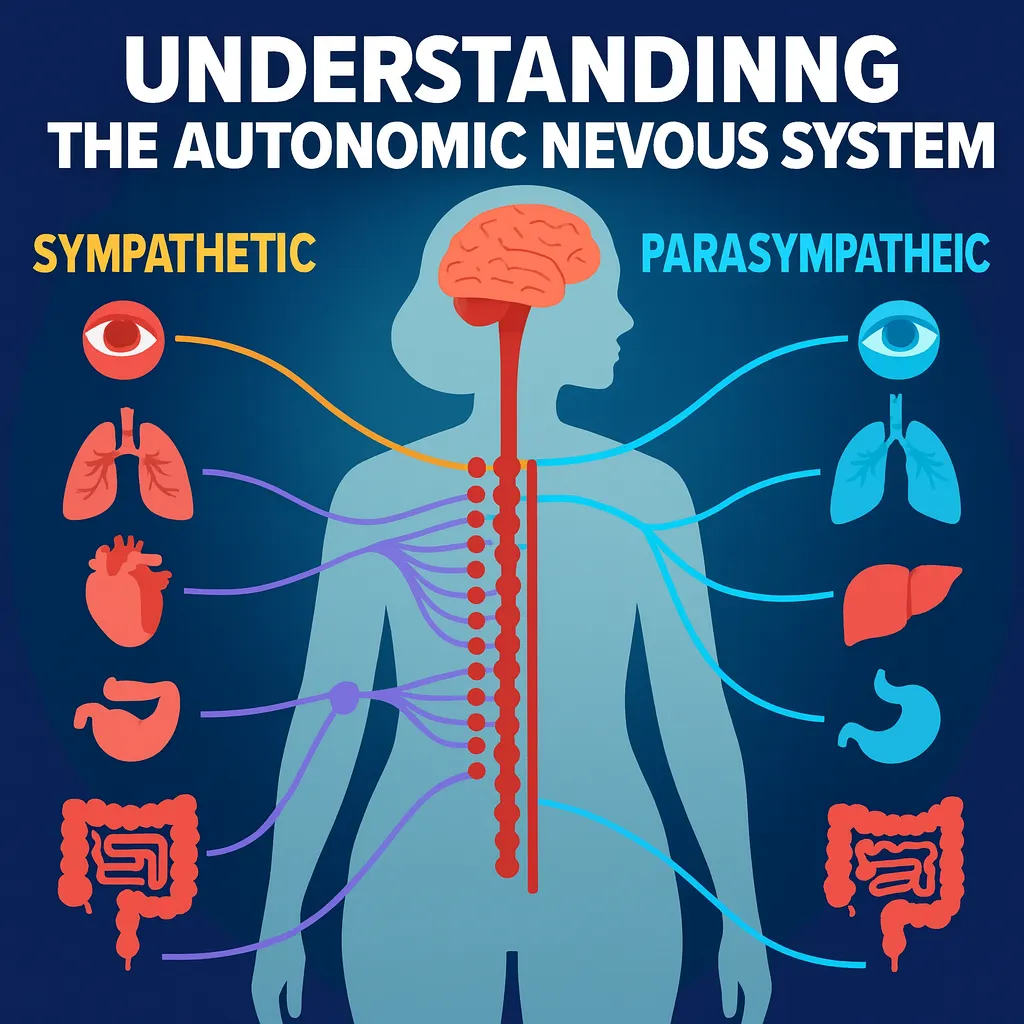
Understanding the Autonomic Nervous System: How It Affects Nursing and Medication Practice
As a nursing student, learning about how the body functions can sometimes feel complex, but understanding the autonomic nervous system (ANS) is essential for safe and effective practice. The ANS influences how many common medications work and helps you understand why patients experience certain side effects or physiological changes.
This post breaks down the key concepts in a straightforward way to help you link biology to pharmacology and clinical care.
What Is the Autonomic Nervous System?
The autonomic nervous system controls the body’s involuntary functions — the activities we do not consciously regulate, such as breathing, heart rate, blood pressure, and digestion.
It is divided into two main branches that work in opposition to maintain balance:
Sympathetic Nervous System (SNS) – prepares the body for activity or stress (“fight or flight”).
Increases heart rate and blood pressure.
Dilates pupils and airways.
Slows digestion.
Parasympathetic Nervous System (PNS) – supports rest, recovery, and energy conservation (“rest and digest”).
Slows heart rate.
Stimulates digestion and glandular activity.
Promotes relaxation and homeostasis.
A simple way to remember the difference is that the SNS acts like the body’s accelerator, while the PNS functions as the brake.
How the ANS Relates to Medications
Many drugs used in nursing affect either the sympathetic or parasympathetic systems. Understanding which branch is being targeted helps nurses predict the desired effects, monitor for side effects, and educate patients appropriately.

Why This Knowledge Matters in Nursing Practice
Understanding the ANS enables nurses to:
Predict and recognise medication side effects, such as low heart rate from beta-blockers or dry mouth from anticholinergics.
Monitor for adverse reactions, especially in patients with complex conditions like asthma or cardiac disease.
Provide patient education about why certain effects occur and what to expect.
Apply pharmacological knowledge safely and confidently in clinical settings.
For instance, a non-selective beta-blocker such as propranolol can worsen bronchoconstriction in patients with asthma, as it inhibits sympathetic control of airway dilation. Recognising this connection between physiology and pharmacology is vital for safe medication administration.
Tips for Learning
Use simple phrases to reinforce understanding, such as “fight or flight” for the SNS and “rest and digest” for the PNS.
Create diagrams showing how each system affects major organs (heart, lungs, pupils, gastrointestinal tract).
Always link what you learn in pharmacology to the body systems you study in anatomy and physiology.
Reflect after each placement experience: consider which medications acted on the ANS and how they influenced the patient’s condition.
Final Thoughts
A solid understanding of the autonomic nervous system bridges the gap between theory and practice. It allows nursing students to connect biological concepts with medication actions, patient assessment, and safe clinical decision-making.
When you understand why a medication works, you move beyond memorising facts and start thinking like a nurse, applying critical reasoning to every aspect of care.
